
PART 2 – AGENTS’ AND PROFESSIONALS’ OPINIONS
As in previous Reports we asked a number of individuals representing a wide range of professionals working in different locations and markets, for their thoughts on the market now and how you see it moving in the next few months? What are the main influences, good and bad?
Survey Spain’s opinion
- The demand is still there but we must be approaching peak value, where buyers decline to purchase due to price and there becomes a realisation that perhaps there is too much of the same seeking a reducing number of buyers willing to pay the price.
- I believe demand will slow, but more quickly than construction can, so that there will come a point where supply does exceed demand.
- At that time there will be prudent promotors discounting their prices and off-plan buyers finding they are locked into a purchase that they may not be able to sell on at the same price.
- Rental restrictions will exacerbate that trend as buyers cannot use rents to support the holding costs of the property.
- I don’t see a bursting bubble, perhaps just a balloon slowly going down making a rude noise!
- However, where there is huge demand is for lower priced properties suitable for younger, family and skilled trades to be able to buy.
- Moving the whole Costa up market has tended to ignore the base of the service economy upon which the luxury lifestyle depends.
 Below are a representative sample of the responses received. It is quite extensive, so I provide an
Executive summary (AI assisted)
- Demand for Spanish property remains strong, with supply tight but not critical; most buyers purchase without debt, so financial risk is low.
- No signs of a property bubble—current market conditions are very different from 2008, with chronic under-supply rather than over-supply.
- Overseas buyers are driving growth, especially cash buyers, while domestic buyers face stricter lending and slower recovery.
- New-builds make up a much smaller share of the market than in the past due to limitations in construction and infrastructure capacities.
- Legal changes and stricter rules on tourist rentals, plus residency requirements, are influencing buyer behaviour.
- Regional differences are pronounced: coastal and tourist areas see high prices and demand, but locals and workers struggle with affordability and rental shortages.
- Labour shortages in construction are causing delays and higher costs, especially for energy-efficient and self-build homes.
- Buyers are increasingly decisive, and investors focus on long-term strategies and rental yields.
- Some regions (e.g., Costa Blanca, Granada) report double-digit price growth; others (e.g., Mallorca) see stabilisation after previous surges.
- Dutch buyers are shifting towards relocation, while Belgian demand is falling due to rising new-build prices.
 Estate Agent – Estepona based
- I see no risks on the horizon in terms of supply and demand. Demand will remain positive, supply will still be an issue but is adequate and hopefully may begin to normalise.
- The majority of buyers will continue to buy without debt meaning there remains no systemic financial risk to the market whatsoever.Â
- The only risk is political but this is all smoke in my opinion. Trump will increasingly be taken less seriously as his term nears its end. He will not invade any country but the baloney he speaks will perpetuate a sense of uncertainty in the future.Â
- So, in short, very positive. Prices should soften but may hold due to size of demand against size of stock.
Property Finder – Buyer’s Representative
- Why have I been seeing so many reports, podcasts, and opinion pieces in the Spanish media, asking if the Spanish property market is overheating, is it in a bubble heading for an inevitable bursting, is it a repeat of 2008? I don’t think so, and that’s because there are absolutely no similarities between pre-2008 market conditions and the 2026 market. The structure of the market is different. The challenges the market faces are different.
- As we head into 2026, we still have a few weeks to wait for the full year statistics to confirm how the Spanish property market performed in 2025, but the new format of rolling monthly statistics from the Notaries means we can be fairly confident the total for 2025 will be another all-time record for overseas buyers. The overseas sector was already in full recovery mode following the 2008 economic meltdown, with over 100,000 foreign buyers in each of the three years before Covid-19 arrived in 2020. The totals for the next two years were distorted by lockdowns and travel bans, but we are now at three straight years of strong growth in the overseas part of the property market. The result is that between 2023 and the end of 2025, the overseas sector grew by 40% in transaction numbers. If it is this level of growth why talk of a bubble, an overheating market has emerged?
- A Market of Two Halves – The overall property market in Spain can be divided into two distinct sectors, the domestic and the overseas. The domestic sector takes 80% of the market, while foreign buyers have a 20% market share. I’ve already mentioned the post-Covid growth of 40% in the overseas sector, but without looking at what happened in the domestic market over the same period, we can’t begin to assess the overall market. When we do, we see a very different market, with much slower growth of 23%. And if you look at the differences in transaction numbers for the two sectors of the Spanish property market between the absolute peak in 2006 and 2026, there are similar discrepancies: the number of foreign buyers has increased by 57%, while the domestic numbers are still 33% lower than in 2006. I think the explanation for the slower growth is that the domestic market is much more mortgage-dependent than the overseas sector. Spain’s banking crisis post-2008 tightened lending criteria to such an extent that large deposits were required from domestic buyers, slowing down the recovery in that sector. At the same time, it was virtually impossible for overseas buyers to secure a mortgage and, as a result, in recent years, the overseas sector has been dominated by cash buyers, and still is, particularly at the higher end of the price range.
- The reality is that the overall total of purchases in Spain is still well behind the 2006 record total, 25% behind according to the latest stats. In my view, it will be 2027, and probably even later, before that 2006 record is surpassed. Today’s market is clearly not a bubble. However, I think it’s worth mentioning that the 2006 record of 955,186 transactions was the culmination of a decade-long building frenzy during which Spain constructed as many as 800,000 units annually, more than Germany, France, and the UK combined. It was substantially over-supplied.
- 2006 v 2026 – When we compare what was being bought back in 2006 with now in 2026, there’s another difference that’s easy to spot. Back then, approximately 40% of all purchases were for new-build properties. In contrast, in 2026 new-builds make up less than 10% of the market. That’s the result of Spain’s construction sector almost disappearing – post-2008 it shrank by 95%. Capacity disappeared, skills disappeared, finance disappeared, and what disappeared over a short timeframe is taking decades to recover.
- The numbers speak for themselves. Spain is currently completing around 100,000 units per year, about 40% below what is needed to cover new household formation, never mind demand for second homes from both domestic and foreign buyers, plus the rental investment sector. In October 2024, the Bank of Spain estimated that Spain is lacking 600,000 properties just to cover new household formation since 2021, when it says the demand/supply ratio became seriously uncoupled. New household formation is currently around 275,000 annually, a figure predicted to rise to around 330,000 by 2028. In addition, the overseas sector of the market has gone global, with over 50% of foreign buyers choosing to be resident in Spain. Nationalities that hardly registered two decades ago are now buying in their thousands annually. The supply-side shortfall seems set to continue for the foreseeable future. Where’s the bubble?
- Spain’s property market was grossly over-supplied when the global financial crisis kicked in, mostly with poor-quality properties in locations nobody wanted. When SAREB, Spain’s ‘bad bank’ was established in 2013, it was estimated the property overhang it was tasked with disposing of amounted to 1.5m unsold units. The most recent data shows the real structural issue in the property market is long-term, chronic under-supply when compared with both domestic and overseas demand. The legacy of the 2008 meltdown in Spain is still shaping today’s housing shortage. So, in my view, it is absurd to even whisper the word ‘bubble’.
 Spanish Property Marketing Consultant
- If I was to give an overview of the market, I would say that 2026 will be very similar to 2025: prices continuing to creep up, low inventory of well-priced key-ready properties in most sought-after areas and perhaps a reduction in new agents coming into the market because of forthcoming regulations.
- In short nothing major to indicate it will be any different at the moment, subject to Sanchez throwing another grenade like he did last January with the 100% tax thing (which is still in the pipeline)
“Digital Pioneer”
- Often overlooked in the Real Estate market is that a percentage of tourists become future residents. Â
- 2025 will be the first year that British tourists exceed pre-covid 2019 stats. Recovery has taken six years. Other international tourist had exceeded pre-covid levels back in 2023.
- Another interesting point:
- The Encuesta de Coyuntura TurÃstica de AndalucÃa (ECTA), conducted by the Instituto de EstadÃstica y CartografÃa de AndalucÃa, reports that 36.2 million tourists visited Andalucia in 2024.
- Of these, 33% (12 million) were Andalucian residents visiting different parts of Andalucia, 31% (11 million) were from other parts of Spain, 27% (10 million) were from the EU (including the UK, but excluding Spain), and 10% (3.6 million) were from the rest of the world.
- The figure of 36.2 million tourists in Andalucia is often misreported in the media as implying that 32 million tourists entered Andalucia.
- More accurately, 24 million tourists entered Andalucia and 12 million stayed overnight in a different part of Andalucia from their place of residence.
- Monthly updated stats here:
- https://www.andalucia.com/spain/statistics/tourism.htm
 Lawyer specialising in Residential ‘grievances’.
- From a legal point of view, what has influenced the market in the past — and what I believe will continue to influence it — is mainly:
- (1) stricter rules and enforcement on tourist rentals, which affects expected yields and makes some properties less attractive unless they are fully compliant
- (2) immigration/residency-related legal changes, because many foreign buyers purchase with long-term stability in mind, and any changes to residency pathways or requirements can shift demand and how purchases are structured.
 Barcelona – Survey Spain Cataluña and Balearics
- In Barcelona and Catalunya, there’s little activity in the residential sector due to high prices and uncertainty surrounding the new rental laws.Â
- However, studies I conducted in the last quarter of 2025, in contrast to these regulations, show that rental offers in Barcelona, ​​and Catalonia in general, with few exceptions, are very close to the average value regulated by the Generalitat (Catalan government) compared to the market value, which is higher, but usually not exceeding the maximum allowed.
- Most purchases at the moment in Barcelona and along the coast, especially in Sitges, are being made by US citizens with high to medium, purchasing power. They are looking for quality homes, but not luxury properties, at mid-to-high, but not exclusive, prices.
- The rest of the market for buyers from other nationalities, after a boom in recent years, is more stagnant, and the local buyer market is looking for affordable prices or opportunities, prioritising price and not location or quality, and with few transactions in general.
- In Mallorca, after the price increases of 2022 and 2023, due to the situation in Ukraine and the emergence of Nordic buyers who were not previously common or predominant on the island, the market has stabilised in terms of prices; they have not decreased.Â
- Therefore, after these large increases, a lot of supply has appeared, but with prices so high compared to three years ago, and without those new buyers who have already purchased their homes, transactions have decreased. This is because markets with regular buyers, such as Germany or the UK, consider these prices too high, and no one is willing to lower them, even though there is so much supply and little demand at those prices. Possibly, over time or in a few years, the usual upward price trend will equalise current prices, leading to more transactions.
- The local market, especially in rentals, has low supply and high demand, and the limited supply is currently very expensive due to this scarcity. This is causing a serious housing access problem, particularly in coastal areas for locals and tourism service workers.Â
- Price regulation will not help solve this, as many owners prefer to dedicate their properties to tourist rentals. Foreign tourists and potential buyers, unable to purchase property due to current high sale prices, are turning to renting for their holidays which restricts the supply for residents.
 Survey Spain Costa Blanca North and Balearics
- After the significant increases recorded in previous years, more moderate yet sustained growth is anticipated in 2026.
- On the Costa Blanca, residential property prices are expected to rise by an average of between 4% and 7%, and by up to 10% in the Balearic Islands, where national price peaks are observed. Even higher increases are forecast in prime areas and high-demand coastal locations. This level of growth is regarded as healthy, as it reinforces property values without generating risks of market overheating.
- One of the most decisive factors in 2026 will be the limited supply of housing, particularly in the new-build segment and in coastal locations.
- The primary drivers of this situation include:
- Limited availability of developable land
- Strict urban planning regulations
- Lengthy administrative approval processes
- A construction pace below market demand
- As a result, well-located properties continue to be absorbed rapidly by the market, maintaining upward pressure on prices and intensifying competition among buyers.
- In 2026, both the Balearic Islands and the Costa Blanca are expected to remain among the most attractive destinations for foreign property buyers in Spain. Demand from Northern European, British, and other international buyers continues to represent a fundamental pillar of the local real estate market.
- Key factors underpinning this demand include:
- A mild climate throughout the year
- More competitive pricing compared to other Mediterranean destinations
- Well-established infrastructure and high-quality healthcare services
- A high standard of living
- Strong rental income potential
- This international demand contributes to market stability and supports price levels, particularly in established coastal and residential areas.
- The real estate market remains heterogeneous, and in 2026 regional disparities are expected to become even more pronounced.
- Prime areas and exclusive locations will continue to register above-average growth.
- Established residential areas with good transport links and access to services will sustain stable demand.
- Inland or emerging areas may experience more moderate growth, offering attractive opportunities for long-term investment.
- A clear trend towards new-build properties and homes with high energy efficiency standards is consolidating in 2026. Buyers increasingly prioritise assets that comply with modern construction, sustainability, and energy performance criteria.
- The most sought-after characteristics include:
- High energy efficiency ratings
- Low maintenance costs
- Efficient heating and cooling systems
- Such properties not only achieve faster absorption rates but also demonstrate stronger value retention over the long term.
- The rental market is expected to remain dynamic throughout 2026, although rental growth is likely to moderate as household borrowing capacity becomes increasingly constrained. Population growth, the arrival of remote workers, and a limited supply of rental housing continue to exert significant pressure on demand. Recent regulatory changes affecting tourist rentals have contributed to rising prices for properties with valid licenses, as well as increased rents in the long-term rental segment.
- Both long-term and holiday rental markets continue to offer attractive yields, particularly in coastal areas and urban centres with well-developed infrastructure.
- Another notable trend for 2026 is the increasingly decisive behaviour of buyers. In the context of limited supply and rising prices, many purchasers are opting to act promptly rather than delay decision-making.
- At the same time, investors are increasingly focused on:
- Long-term investment strategies
- Properties with strong rental yield potential
- Established areas with proven and sustained demand
- This investment approach supports overall market stability and helps to mitigate volatility.
- The Balearic and Costa Blanca real estate market enters 2026 from a position of strength. Although price growth is expected to be more moderate, the underlying fundamentals of the market remain robust.
- The key trends shaping the market in 2026 include:
- Sustained price growth
- Limited housing supply
- A strong presence of international buyers
- An active rental market
- Increased emphasis on quality, sustainability, and location.
Architect – Survey Spain Marbella to Sotogrande
- We notice that there appears to be more movement in the tourist apartments as owners are pushed out of the tourist licence option. This seems to have added homes back for sale or long term rent.
- Homes are now locked up and vacant for longer as the market for rental without a licence is illegal.
 Architect – Survey Spain Costa Blanca South
- The demand for homes continues to rise and prices continue to rise day by day… It is an uncertainty how long the system can hold, as the price of new housing is above €4,000m2.
- The demand for rental is brutal but there is hardly any market available at a reasonable price as owners prefer to make their homes available for tourist use.
- The second-hand market is also skyrocketing, with the price being around €3,000/m2 at least, depending on the proximity to the coast and the condition of the property.
 Valuer and Project Manager – Survey Spain Granada
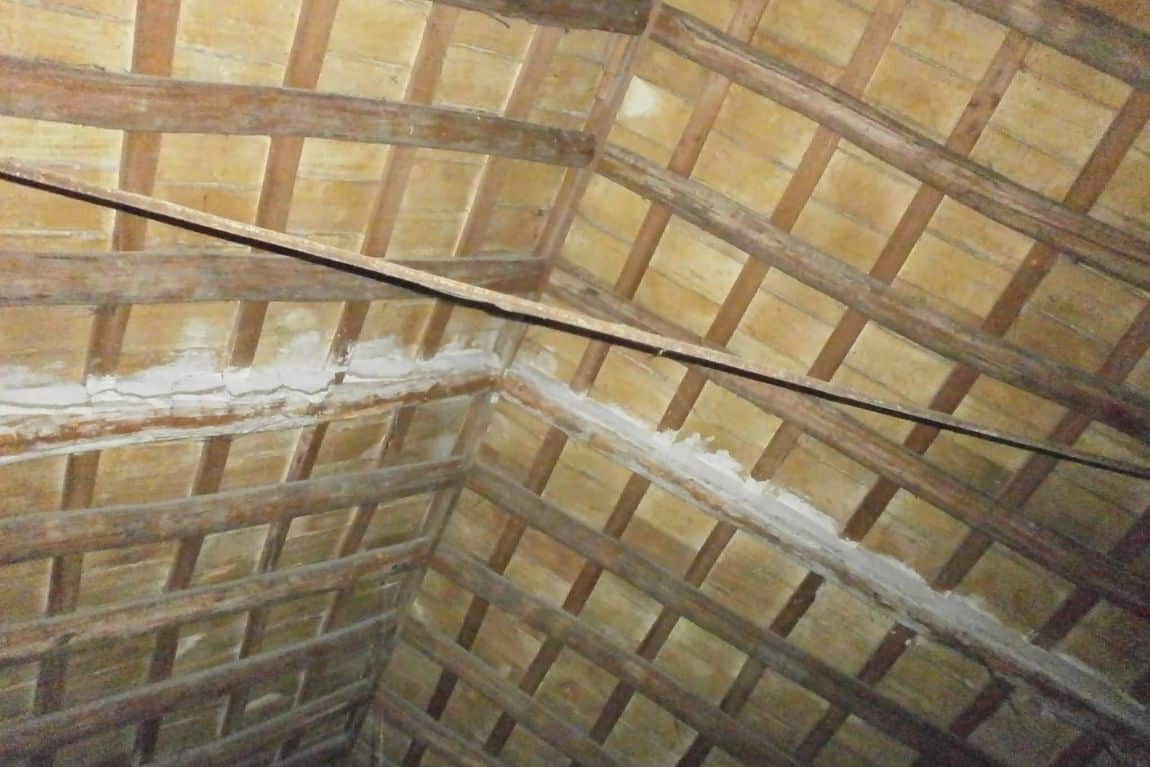
- Granada finished 2025 in a clear up-cycle for both sales and rentals, driven by strong demand and constrained supply. Portal and regional reporting point to double-digit price growth across 2025, with Granada province also cited among the faster-rising Andalusian markets.
- Pricing snapshot (asking prices):
- Granada Province (sales): €1,723/m² in Dec 2025, +14.6% YoY.
- Granada City (sales): ~€2,556/m² in Nov 2025, +11.4% YoY (idealista report).
- Granada Province (rent): €9.9/m²/month in Dec 2025, roughly mid-single-digit YoY growth (idealista).
- Granada City (rent): around €10.4/m²/month (idealista valuation page).
- Foreign vs domestic demand
- Domestic buyers are typically more mortgage-dependent, so activity tends to respond more to interest rates and affordability.
- Foreign buyers (resident and non-resident) are often more driven by lifestyle, second-home goals, and diversification, and can be less sensitive to Spanish mortgage conditions (especially cash or equity-funded purchases).
- In Granada, that often means domestic demand dominates “everyday” neighbourhoods, while foreign demand can concentrate on quality-of-life locations and property types that fit relocation/second-home use.
- Demand for Self-build, in which I am active, is being supported by three realities in Spain right now:
- Shortage of finished housing supply, especially where planning and land delivery are slow — which pushes some buyers to consider “build rather than buy.”
- A steady pipeline of single-family activity: national building-permit reporting for 2025 shows meaningful volumes of new-build permits, including tens of thousands of single-family (unifamiliar) permits over the year to date, indicating continued appetite for one-off/custom homes.
- Buyer preferences for energy efficiency and design control: higher utility awareness and quality expectations increasingly favour projects where clients can specify insulation, systems, and layout from day one (a natural fit with my specialty).
- Short-term outlook (next few months: Jan–Spring 2026)
- Sales prices: likely to keep rising, but the pace may moderate versus the headline YoY rates seen through late 2025, depending on supply and financing conditions.
- Rents: likely to remain upward-pressured due to tight supply; any relief would require a material increase in available long-let stock.
- Self-build: should remain attractive for households who can secure land and want performance/spec control—especially if turnkey options remain scarce and expensive.
- Key positive and negative forces
- Supports: improving sentiment if financing stays stable, persistent housing undersupply, continued interest in quality-of-life locations and energy-efficient homes.
- Risks: affordability stress (prices vs incomes), planning/land bottlenecks, and any renewed inflation/interest-rate surprise that hits mortgage-dependent demand first.
- Yes, skilled labour shortages are a real and material issue in Spain’s construction sector, and they affect Granada, albeit less severely than major hotspots like Madrid, Barcelona, or Málaga. The issue does not usually stop projects outright, but it creates programme risk, cost pressure, and quality risk, especially for energy-efficient and self-build homes.
- Why there is a shortage?
- Ageing workforce – A high proportion of skilled trades and site managers are over 45–50, with retirements outpacing new entrants.
- Post-2008 disruption – Many experienced workers left the sector permanently after the financial crisis; training pipelines never fully recovered.
- Skills mismatch – The biggest gaps are not in basic labour, but in:
- Site foremen and experienced project managers
- Qualified electricians, plumbers, HVAC specialists
- Trades familiar with modern, energy-efficient construction systems
- The Granada reality
- General labour and traditional masonry are usually available.
- Highly organised contractors and specialist trades are in shorter supply and often booked well in advance.
- Skills related to airtightness, insulation continuity, modern timber systems, precast panels, and coordinated MEP installations are limited.
- This means the best teams are busy, while less experienced teams require much stronger supervision to avoid problems.
- How the shortage shows up on real projects
- Labour shortages typically appear as:
- Programme delays – trades unavailable when needed, poor sequencing between subcontractors
- Cost pressure – higher rates for skilled trades and costly rework
- Quality risk – especially critical for low-energy homes, where performance depends on workmanship, not just design
- Impact on self-build and custom homes
- Self-build projects are more exposed when:
- Clients contract trades directly
- There is no single point of responsibility
- Construction systems are unfamiliar to local teams
- However, self-build becomes lower risk when delivered through:
- A project-managed or design-and-build model
- Pre-vetted contractors
- Clear scope, sequencing, and quality control
- Repetitive or partially off-site systems
- What this means in 2026
- Skilled labour shortages are not expected to disappear in the short term. As a result:
- Timelines need to be planned more carefully
- Cost certainty requires stronger upfront definition
- Clients increasingly value reliability, risk reduction, and professional management
Mortgage Consultant
- Euribor looks to remain steady at current levels but this could change in an instant depending on what global events occur that could affect inflation rates or the current order of things.
- We will see more chatter from banks and insurance companies about Lifetime Mortgages / Hipotecas Inversas for the over 65 homeowners, which will be good for a very competitive mortgage market. It could remove from the market some properties currently for sale as owners want to raise money to live on. This will be small now, but if it becomes generally accepted it could increase significantly over the next few years.
- There is fierce competition between Spanish lenders for new business meaning that interest rates in Spain are some of the lowest available in most established western economies especially the UK and the USA making Spanish mortgage lending very attractive to certain non-resident borrowers.
- Large deposits are still required to be invested by property buyers meaning that there seems to be a good amount of equity remains in the property stock and this trend is unlikely to change as central government and bank of Spain regulations are to remain tight.
 Technical Architect – Survey Spain – Mijas
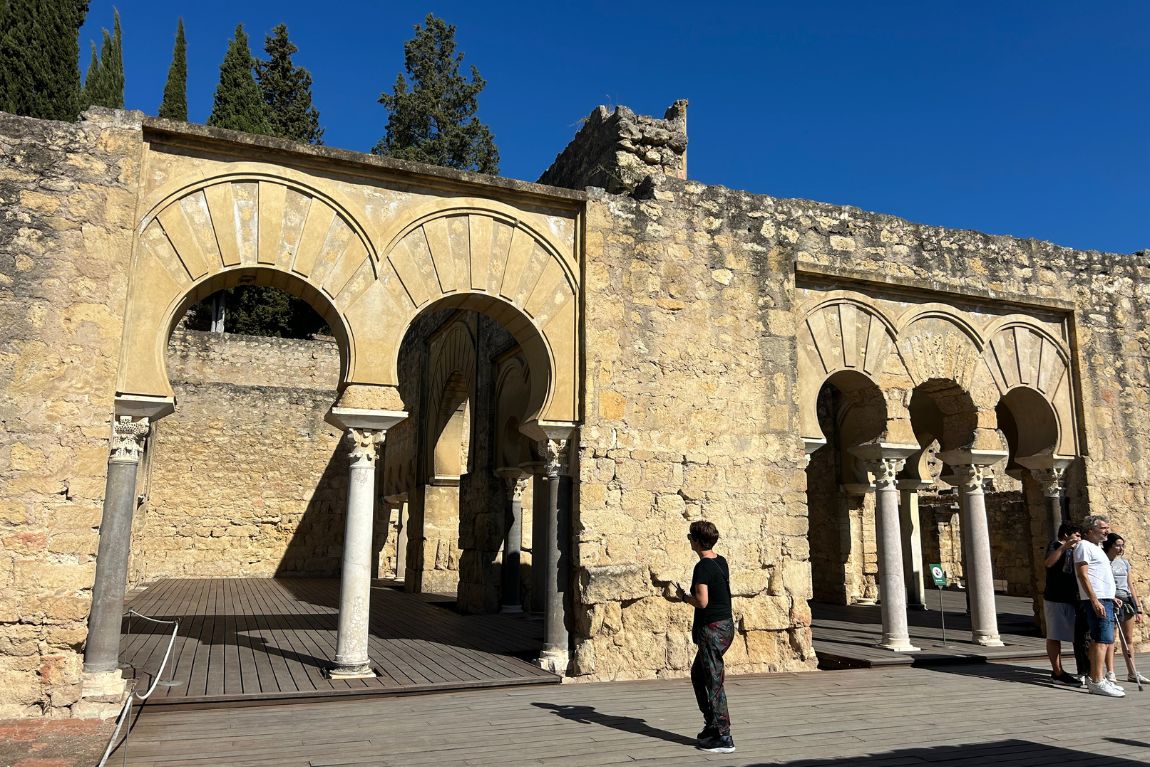
- I don’t have much relation with buyers or sellers now that I’ve already got my apartment; I’ve totally relaxed and forgotten about all of this fuss!! what a relief that was.
- I’ve been speaking with builders and that they have so much work that they have to turn down many projects (even if they are millions in quote) due to not having enough workers (not to say about qualified ones, that must be like finding a treasure), and this is something general.Â
- About prices, I don’t investigate as much as before, but I continue to see them rising and the few agents I’ve spoken with tell me that work is going well.
- Regarding shortage of electricity, no, I haven’t heard yet of any developer with this problem. But it does make sense, so many new urbanisations and electricity not being infinite. And then they want us all to have electric cars now, how is this going to work?
 Estate Agent buyer specialist – Netherlands and Belgian buyers.
- My expectations for the Belgians and Dutch buying in Spain?
- Interestingly, buyer motivation has continued to evolve.
- Among Dutch buyers in particular, nearly one in three is actively considering relocation to Spain, rather than purchasing purely for holiday use or investment. This shift has a clear impact on the type of properties in demand.
- While second-home buyers tend to prefer more compact, easy-to-maintain properties, relocation buyers are opting for larger homes — often bigger than the properties they owned in their home country — with more living space and long-term comfort in mind.
- Looking ahead: what can we expect?
- The outlook for the coming months remains positive. As long as tax pressure and regulatory uncertainty persist in the Netherlands, Spain will continue to rank high on the list of preferred destinations for Dutch buyers.
- For Belgian non-resident buyers, however, we expect demand to gradually decline.
- Belgian buyers have traditionally shown a strong preference for new-build properties — around one in three purchases falls into this category.
- As new-build prices continue to rise, an increasing number of Belgian buyers no longer have sufficient budget to enter the Spanish market.
- According to figures from the Belgian Federal Public Service Finance, the median purchase price paid by Belgian buyers is approximately €200,000, while the average price stands at €385,000.
- This growing gap between budgets and new-build pricing means that fewer Belgian buyers will be able to afford newly built properties in Spain in the near future.
- We also see growing interest in Murcia and Almeria. More price friendly regions.
- And some owners leaving the Costa del Sol because it is becoming to crowdy, traffic problems and rising cost of living. Even when they have the purchasing power, they do not want to pay ” crazy prices ” for their lunch, dinner or beach clubs.
Estate Agent – Costa del Sol
- From where I’m sitting, the market will become more segmented. I’m increasingly seeing the market in two halves: holiday home buyers and permanent relocators.
- Holiday home buyers are definitely a bit more cautious than they were. With so much political and economic turmoil around the world, discretionary purchases are the easiest thing to pause — and for many buyers, it only takes one headline to decide to keep their powder dry for a while longer.
- Permanent relocators, on the other hand, remain very strong. These buyers tend to be driven by lifestyle, schooling, work flexibility and long-term plans rather than short-term market sentiment. As a result, they’re far less reactive to global noise and much more focused on finding the right property in the right location.
- Supply is still a challenge, particularly for well-priced, good-quality homes, and those continue to move well.
- Overall, I’d expect the next six months to remain solid rather than spectacular — with activity led by committed buyers and realistic sellers rather than speculative ones.
 Insurance Broker – Costa del Sol
- Specialising in Insurance for Residents and Residency & Visa clients for Spain and the Balearics —
- I expect the next six months to be shaped by steady demand from UK nationals, growing interest from North American buyers, and an increased emphasis on comprehensive, visa-compliant healthcare cover.
- Based on market experience and current enquiries, a working estimate of incoming national mix is roughly 60% UK, 25% US and 15% Canadian.
- Age profiles show older for UK arrivals (many 55+ coming to retire), while US and Canadian applicants trend younger and more mixed: roughly 40–50% working-age professionals (25–54), 25–35% retirees (55+), and the remainder families or students.
- These clients are placing higher priority on rapid, certified health cover for visa approval, telemedicine access, and plans that cover both initial residency entry and longer-term private care
Buyer’s Agent
- Costa del Sol – demand remains strong, prices are stable.
- I am expecting them to grow steadily. Costa del Sol will always be a location with strong demand. Buyers are still outnumbering sellers.
- Correctly priced properties are selling quickly.
- Costa Blanca – always a number one location for British and Irish buyers, especially for clients looking to relocate as it is still possible to purchase a villa with private pool for under €500.000
- Mar Menor – This area is experiencing an extreme lack of stock, the demand is high from buyers as it still represents excellent value for money to UK and Irish buyers
Building Surveyor and Valuer – Survey Spain Las Canarias
- To give a report on the present state of the property market in the Canaries is not easy at the moment. My comments relate to the south of Tenerife, where most of the property purchases by non-resident or non-national take place.
- What has happened up until now is that purchasers have mainly been looking to purchase properties to live in as a second home for a few months of the year or alternatively, they have been looking to purchase to settle and live in the property as a year round resident of the Canaries.
- Others have looked to purchase to rent out as short term lets, Viviendas Vacacionales or VVs. Many doing this have had handsome rewards, financially, and many have added to their portfolios of short term let properties on the back of profits from their initial rental properties.
- However, this effect, added to the continued increasing popularity of the Canaries as a place to stay and live, has led to a shortage of properties being available to let long term to workers or the retired.
- In addition, as few social housing developments have been built during the last 20 years, social unrest has grown to the point that a law has been passed in the Canarian Parliament that is intended to manage and control numbers and locations of short-term let properties to try to readdress the balance.
- The main points of the new law are:
- Any new residential complex built will have to be residential for the first ten years of its life. No VVs will be allowed.
- No new VVs licences will be granted anywhere for the next 5 years.
- All Town Halls must, within the next six months, start a process of reclassifying land within its municipality. This classification must clarify where VVs are allowed. VVs cannot comprise more than 10% of all the properties within a municipality.
- Only when each Town Hall has defined where VV properties are allowed, will the Tourism Department be allowed to approve new VV licences.
- So, there is much uncertainty here. Estate agents are being more careful now when asked by a potential purchaser if a property they are interested in can be rented as a VV.
- Properties are still coming onto the market. For example, when people retire or British residents, being non-EU citizens and without permanent residence, get fed up with being restricted to 90 days in every 180 days and find changes in passport controls too much to deal with at their age. However, they always want to sell their property for a bit more than next door sold theirs for!
- I see that the market isn’t that strong, other than for premium location properties. Those properties always sell. There is always a Belgium, German, Ukrainian, Pole or other eastern European trying to get as far away from Putin or the cold in winter as possible.
- However, normal not premium properties, which would usually have been snapped up to rent on a short term basis, are proving more difficult to sell and are likely to stay so.
- I think that in the areas that I have mentioned in Tenerife we are going to see numbers of properties for sale gradually increase, but I think the majority of normal properties are going to take longer than usual to sell and sellers might have to offer a discount to move the property on.
- The saving grace I think is that with the uncertainty in the world at the moment, fuelled by such characters such as Trump and Putin, people will continue to seek safe havens, which I hope Tenerife continues to be.
The Olive Press
Difficulties in obtaining electricity connections.
https://www.theolivepress.es/spain-news/2026/01/13/estepona-homeowners-unable-move-in-power-grid/
Idealista
Tax benefits of adding energy saving investment into homes.
 This section of the Report is now dedicated to Sotogrande and Gibraltar
When speaking to one agent, he referred me to the Report that he had completed recently. So, I looked for others and found a number. AI has provided a summary of 5 of the principal ones.
1. Noll Sotogrande Annual Report 2024–2025
- Market Overview: Sotogrande continues to attract international buyers, with strong demand for luxury villas and apartments.
- Key Trends: Sustainability and energy-efficient homes are gaining traction; competitive seller’s market persists.
- Outlook: Positive growth expected through 2025, supported by infrastructure improvements and limited supply. [noll-sotogrande.com]
2. Luxury Sotogrande Market Analysis
- Growth Metrics: Property values increased by 5% annually, with an 8% rise in high-end transactions.
- Drivers: Infrastructure developments and lifestyle amenities are boosting demand.
- Forecast: Continued upward trend in luxury segment, especially for waterfront properties. [luxurysotogrande.com]
3. Engel & Volkers Market Data
- Price Evolution:
- 2024: €3,495/m² (+11.56%)
- 2025: ¢3,884/m² (+11.12%)
- Projection: 2026 average for flats expected at €3,913/m².
- Implication: Strong appreciation trend, signalling robust investor confidence. [engelvoelkers.com]
4. Property Specialists Sotogrande Trends 2025
- Price Ranges:
- Villas: Often exceed €2M.
- Marina Apartments: €450K–€1.5M.
- Market Dynamics: 8% price growth in 2024; high demand from Northern Europe and UK buyers.
- Investment Insight: Premium properties in La Reserva and Marina remain top picks. [propertysp…grande.com]
5. Coast Estates Sotogrande Update
- Performance: Average sale prices up 30% since 2023.
- New Developments: Projects like The 15 and Village Verde are shaping the luxury landscape.
- Buyer Profile: High-net-worth individuals seeking exclusivity and lifestyle amenities. [coastestat…grande.com]
Within Sotogrande, the management company Sotogrande SA is the principal developer and ‘character maintainer’ in the locality. So, here’s a summary of Sotogrande SA’s current and flagship projects, based on the latest available information:
1. Village Verde – La Reserva.
- Features:
- 124 luxury apartments and Sky Villas set within 6 hectares of parkland.
- Indoor and outdoor pools, spa, gyms, jogging trails, croquet lawns, children’s play zones. Concierge service and private security.
2. The 15 – La Gran Reserva
- Concept: An ultra-exclusive private development of 15 luxury villas in La Reserva.
- Design: Each villa sits on a half-hectare plot with panoramic views of Sotogrande, the Mediterranean, and Africa.
- Features: Concierge and maintenance services for residents and Architectural designs by top national and international architects.
3. La Reserva Club Enhancements
- Focus: Expansion of lifestyle amenities including golf, tennis, and the La Reserva Beach Club Lagoon.
- Integration: These facilities complement residential projects like Village Verde and The 15, reinforcing Sotogrande’s reputation for luxury living.
4. Other Notable Developments
- Las Villas de Los Ãlamos: Elegant villas and semi-detached homes in La Reserva.
- Senda Chica & La Finca: Contemporary homes in La Reserva, designed for family living.
Key Themes Across Projects
- Ultra-Luxury Positioning: Sotogrande SA is targeting high-net-worth buyers with bespoke villas and premium apartments.
- Sustainability & Technology: Energy-efficient systems, smart-home integration, and eco-conscious design are central.
- Lifestyle Integration: Projects are anchored by world-class amenities—golf, polo, marina, and wellness facilities.
- Privacy & Exclusivity: Low-density planning ensures space, security, and discretion.
 Gibraltar
The proximity of Gibraltar has always been a major influence on Sotogrande’s market. Over the last few years, especially since Brexit in 2016, it’s been becoming more difficult (and more expensive) for Gibraltarians to have a foothold in both the Gibraltar and neighbouring Spanish markets. However, with an agreement with the EU almost in ‘touching distance’, the market has picked up. Again, with the help of AI, here are my findings –
1. Gibraltar–Spain Border Agreement: A Game-Changer
- June 2025: Spain, UK, Gibraltar, and the EU agreed to abolish land border checks, shifting controls to Gibraltar’s airport and port. Full implementation expected by mid-2026.
- Over 15,000 daily commuters will benefit from frictionless movement, making Sotogrande and La Alcaidesa highly attractive for Gibraltar-based professionals.
- Lifestyle Appeal: Buyers can enjoy larger homes and golf communities in Spain while working in Gibraltar, reducing reliance on its limited housing stock.
2. Sotogrande Market Dynamics
- Price Growth: Sotogrande property values rose ~5% annually, with high-end transactions up 8%. Average price now €4,200/m².
- Demand Drivers:
- Improved commuting and Schengen integration.
- Tax advantages for Gibraltar residents who maintain secondary homes in Sotogrande.
- Investor Outlook: Premium villas and apartments in La Reserva and beachfront areas are expected to appreciate further as cross-border certainty unlocks deferred purchases.
3. La Alcaidesa: Rising Star
- Strategic Location: 10 minutes from Sotogrande and 15 minutes from Gibraltar Airport,
- Tourism & Infrastructure Boost:
- Opening of Fairmont La Hacienda Costa del Sol and OKU Hotel.
- Golf courses ranked among Spain’s best.
- Investment Potential:
- Increased short-term rental demand due to easier access.
- New developments signal strong capital appreciation prospects.
4. Key Opportunities
- Cross-Border Lifestyle: High-net-worth individuals choose Gibraltar for tax residency and Sotogrande/Alcaidesa for space and amenities.
- Rental Market Growth: Tourism surge and commuting ease will boost holiday lets and long-term rentals.
- Luxury Segment Expansion: Villas and frontline golf homes in Alcaidesa and premium Sotogrande estates remain top picks for investors.
5. Risks & Considerations
- Tax Complexity: Spain–Gibraltar tax treaty has a four-year rule for residency changes.
- Regulatory Uncertainty: Full treaty ratification and implementation timelines uncertain.
- Market Saturation: Gibraltar’s influx of high-end units may soften rental yields locally, though Spanish side remains competitive.
Contributors
Thank you to all the contributors for giving your time and thoughts – in alphabetical order –
Adam Neale – Terra Meridiana
Alfonso Lacruz – Estate Agent
Alfredo Bloy-Dawson – Property Marketing Consultant
Barbara Wood – Buyer’s Agent
Chris Chaplow – Digital Pioneer
Gonzalo – Architect. Survey Spain Marbella to Sotogrande
Idealista – Multi-listing website and News source
Javier – Architect – Survey Spain Costa Blanca North and Balearics
John – RICS – Survey Spain Granada
Jonathan РArquitecto T̩cnico РSurvey Spain Mijas
Jordi РRICS РSurvey Spain Catalu̱a and Balearics
Keith Spitalnick – Estate Agent
Lorraine de Marco – Buyer’s Agent
Marc Elliott – Mortgage Consultant
Marleen de Vijt – Estate Agent – Netherlands and Belgian buyers.
Maria de Castro – Lawyer specialising in consumer property law.
Olive Press (The) – English Language Newspaper all Spain.
Paqui – Survey Spain Costa Blanca South
Resales Online – Multi-Listing website
Sam Campbell – Insurance
Sotogrande Agents – (As stated above)
Take care and we’ll all get through this.
We’ve just got to work out what sort of world it will be,
and what part we will play in it.
Campbell D Ferguson, FRICS, Land Economist.
Chartered Surveyor in Spain. Director. Survey Spain SL.
“We consider the money spent an investment into our peace of mind
that we are making a good choice, rather than a cost”
 A new dawn?
!
 The developers and buyers will be hoping the fable is true

