 Research for this month’s report has used AI by asking it specific questions and editing the responses according to our experiences and opinion. These questions and answers have been based on information records gathered by us over the last 6 months.
PART 1 – GENERAL INFLUENCES
Executive Summary
- Property values continue to be supported by chronic undersupply rather than speculative demand.
- Tourism remains exceptionally strong despite higher prices and inflationary pressures.
- Infrastructure in general is increasingly struggling to support rising resident population, and even more when tourism growth is added, particularly on the Costa del Sol.
- Construction costs remain under pressure from global energy and supply-chain issues.
- The Ukraine and Middle East conflicts continue to affect costs and have increased demand.
- The electricity blackout in 2025 has increased awareness of individual energy resilience but has not directly influenced values.
- The extensive wildfires are too recent to show in demand and values but are expected to influence opinion against isolated rural property, especially if within heavily wooded areas.
- Foreign purchasers remain one of the strongest drivers of coastal and island markets.
Housing – The Same Problem Wearing Different Clothes
- Housing availability is the underlying core to almost everything happening in Spain.
- Politicians continue to propose controls, restrictions, registrations, taxes, incentives and penalties. Yet the simple reality is that Spain is not making available or producing enough homes where people actually want to live.
- The result is visible everywhere. Buyers compete for limited stock. Renters compete for limited accommodation. Developers compete for limited land, labour and infrastructure.
- Demand remains remarkably resilient.
- Supply remains inadequate.
Tourism – People Still Come
- There has been discussion over whether improving weather in Northern Europe and rising prices in Spain would discourage visitors. Apparently not.
- Visitor numbers and tourist spending remain exceptionally strong. British visitors continue to arrive in huge numbers despite complaints that Marbella beach clubs, Ibiza restaurants and Mallorca hotels are beginning to resemble London prices and generally on the Costas the costs of many things are similar to ‘home’. It’s no longer a cheap holiday in the principal tourist spots.
- What may be changing is behaviour rather than demand. Visitors are becoming more selective. They are travelling outside peak periods, comparing destinations more carefully and searching for value. Even travelling inland away from the coasts.
- Spain continues to benefit from people searching for more than sunshine alone. It offers familiarity, accessibility, food, culture and on the coasts an increasingly international lifestyle.
Allocation of Resources – ‘Gentrification’ is leaving the locals behind.
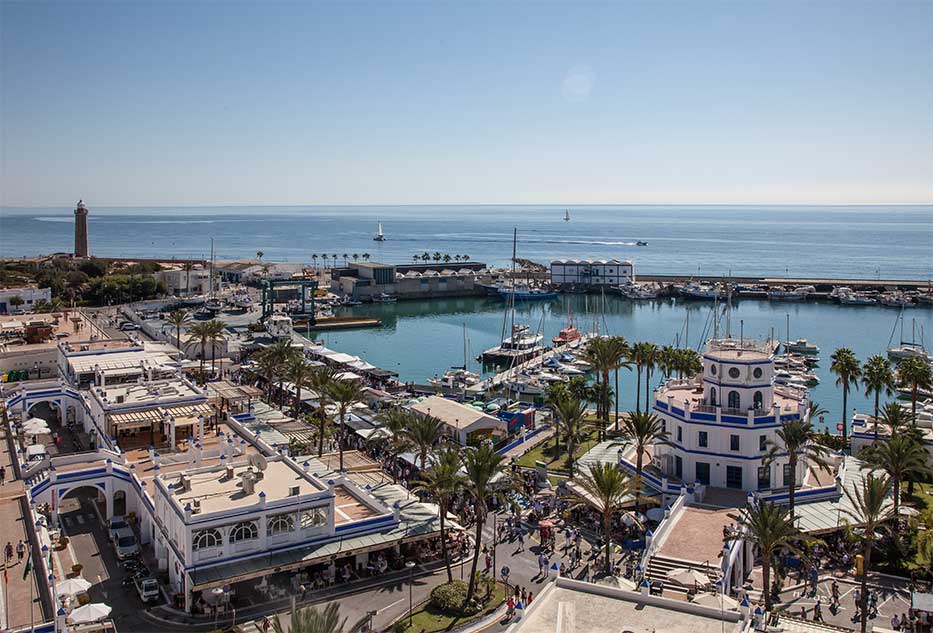
Estepona puerto
- It’s becoming increasingly obvious that scarce resources of skilled workers and building materials are being directed towards high value, high spec properties.
- Supply is ignoring the support required for these in the form of housing at levels that the support workers such as waiting staff, cooks, street sweepers can afford to live in.
- Even standard apartments being built are way above what the families of the tradesmen building them can afford to buy or even rent.
- High land values demand either intensive housing, which planners have been frowning upon, or high priced standard apartments, townhouses or villas.
- The lack of skilled workers and the relentless demand for ‘another development as the money is there to finance it’, combine to provide shoddy goods dressed up as palaces.
Residential tourism is changing in Spain from a second home to place to live.
- This is giving rise to more individuals on the ‘padron’ and more tax and State income for the Ayuntamientos.
- It is also removing some of the seasonality from the local economy as buyers become permanent neighbours.
- However, it does also bring more pressure on facilities such as schools and doctors’
surgeries.
Traffic, Transport and Congestion
- Thankfully, the long school holidays are at the same time as the peak tourist season, or every interchange on the coastal highway would become blocked. Combined with the high volume of construction related traffic, and container traffic from Algeciras Port, despite the coastal and parallel toll highway, congestion is approaching major city status.
- The Costa del Sol has spent years encouraging growth, urban development and tourism whilst largely expecting the same roads to carry the additional burden. One of the problems is that major infrastructure finance depends upon central government allocation of EU funding and that all takes years with so many competing claims.
- Many residents now spend more time discussing traffic than property values and where they can live to avoid that stress. Movement inland away from the stresses and expenses of the Costas is becoming more popular.
- The growth of development in the ‘Golden Triangle’ of Marbella, Estepona and Benahavis, spreads out to neighbouring Municipalities of Manilva and Mijas, which also are continuing to grow rapidly. Yet everything remains dependent upon roads that become increasingly congested. More roads degrade the general environment, so there just needs to be less not more traffic.
- The lack of a coastal railway west of Fuengirola is becoming more difficult to justify each year and even European institutions have expressed concerns regarding this continuing deficiency.
- There is no evidence yet that congestion has damaged values, but there are many residents who long for the easy traffic and even the lost seasonality of previous years. Will tourist still come when the open spaces and views are lost and their holiday is merely swapping one urban jungle for another?
- However, ease of accessibility must increasingly affect buyer choice and the values they will pay.
Electricity and Infrastructure
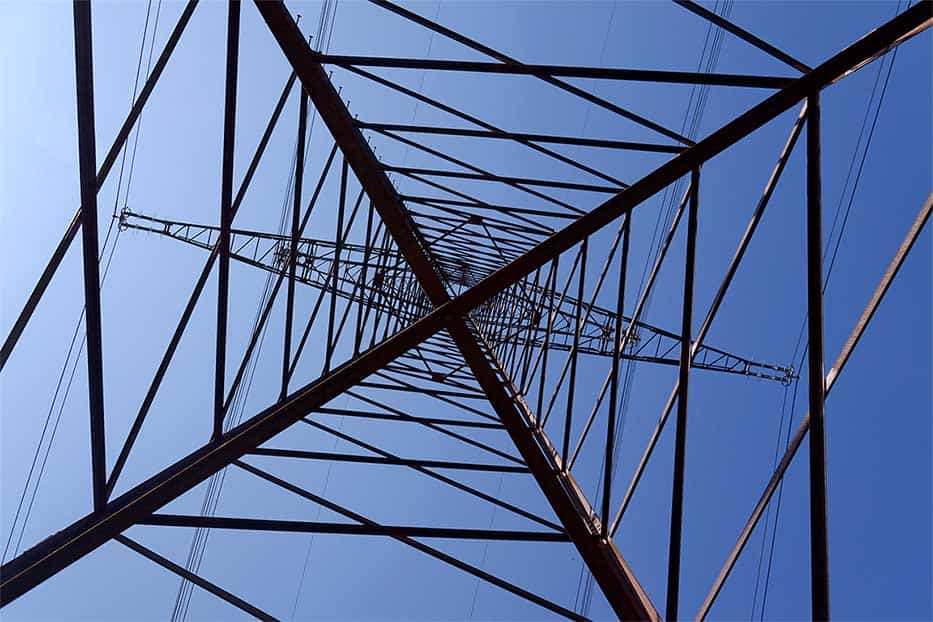
Electricity pylons conducting current from distribution power station, blackout and grid stability concept,
- The Iberian blackout of 2025 generated dramatic headlines but appears to have had little influence on buyer demand.
– Subsequent investigations concluded that the causes were complex and technical
rather than evidence of a fundamental shortage of generating capacity. Inadequate
infrastructure once again. - What has changed is awareness, encouraged by stronger EU demands on energy saving and reduced CO2 creation.
- Buyers increasingly ask about:
– Solar panels.
– Battery storage.
– Backup power.
– Energy efficiency.
– Utility infrastructure. - In premium markets particularly, these issues are now influencing value.
Hi-Tec and Branded Properties
- Always seeking to be one step ahead of the competition and provide the ‘latest’, more properties are installing ever increasing domotic systems controlling all functions of the house.
- That increases the running costs of the house as a maintenance contract is essential and there must be some form of ‘failsafe’ so that basic services still operate if there is a technical ‘glitch’.
- Just think of the number of times you need to ‘reboot’ your computer or mobile phone. How does the average person ‘reboot’ a domotic system and know if that’s what’s required or will make matters worse.
- These are also an essential part of branded homes.
- As stated previously, we are of the opinion that a branded home is really only a long term advantage if it is tied to a hospitality specialist company contract, such as an elite hotel, where the home becomes an off-site ‘suite’ benefitting from all the hotels services and facilities.
Ukraine, Iran and Energy
- The wars in Ukraine and the Middle East continue to influence the property market.
- Fortunately, international buyers see Spain as a safe, stable and attractive destination compared with much of the world.
- The Iran war has brought many of the neighbouring states into the ‘war zone’, reducing competition especially for investors, with many ‘expats’ making the return journey to Europe. And where better than Spain?
- Both of these, plus to a lesser extent, US Americans seeking a haven as they are unable to tolerate Trump’s USA, have supported the continuing strong demand for property.
- Their impact on the supply side appears through the costs of:
– Energy.
– Building materials.
– Transportation.
– Inflation.
– Interest rates. - Construction organisations continue warning that rising costs (between 6-10% have been estimated due to the war) are slowing the delivery of new housing and increasing the cost of development.
Spain Wins the World Cup

The trophy of the 2026 FIFA World Cup and the official Adidas Trionda ball on the green lawn of the stadium. Photo credit ifg – stock.adobe.com
- Can a football tournament influence a property market? Not directly it appears.
- Spain’s World Cup victory has certainly improved national mood and international visibility.
- Tourism commentators report a noticeable increase in international interest immediately following the tournament.
- However, nobody buys a villa in Marbella simply because their favourite football team won(except if they are one of the players!!).
- The market remains driven by economics, lifestyle and housing shortages rather than sporting success.
Did you like this post? Please feel free to share it, acknowledging that it was sourced from Survey Spain.